What are the structural characteristics of carbon steel spiral plate heat exchangers
Information summary:The carbon steel spiral plate heat exchanger is an efficient heat exchange equipment designed based on a "spiral flow channel". Its structural characteristics revolve around "strengthening heat transfer, optimizing flow field, and adapting to carbon steel material characteristics". The core can be analyzed from four dimensions: core components, flow channel design, sealing structure, and support m
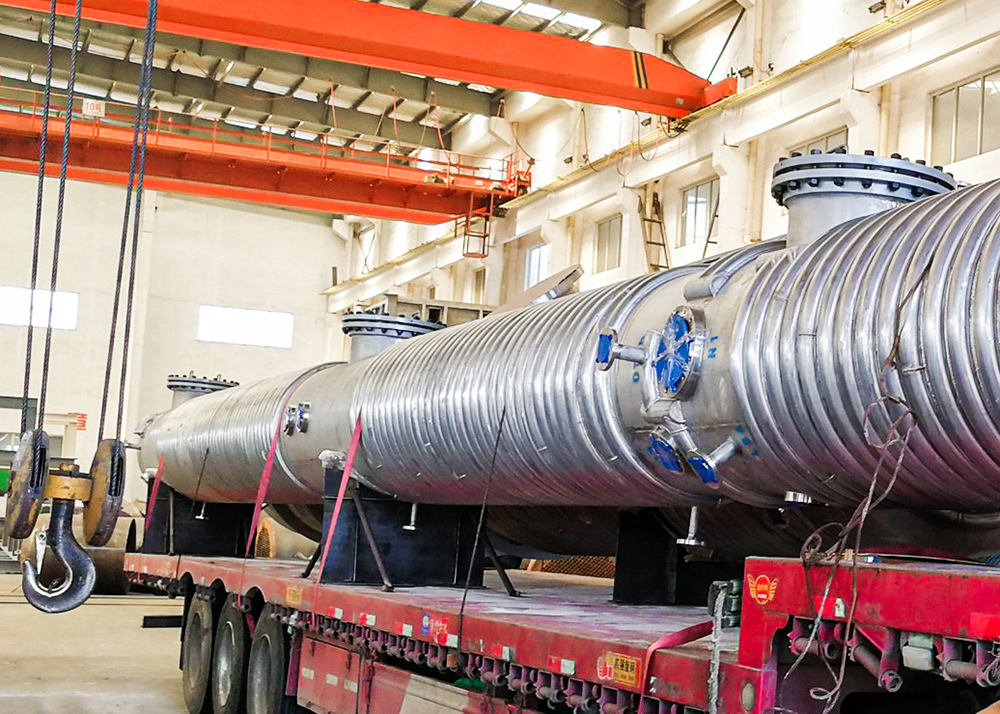
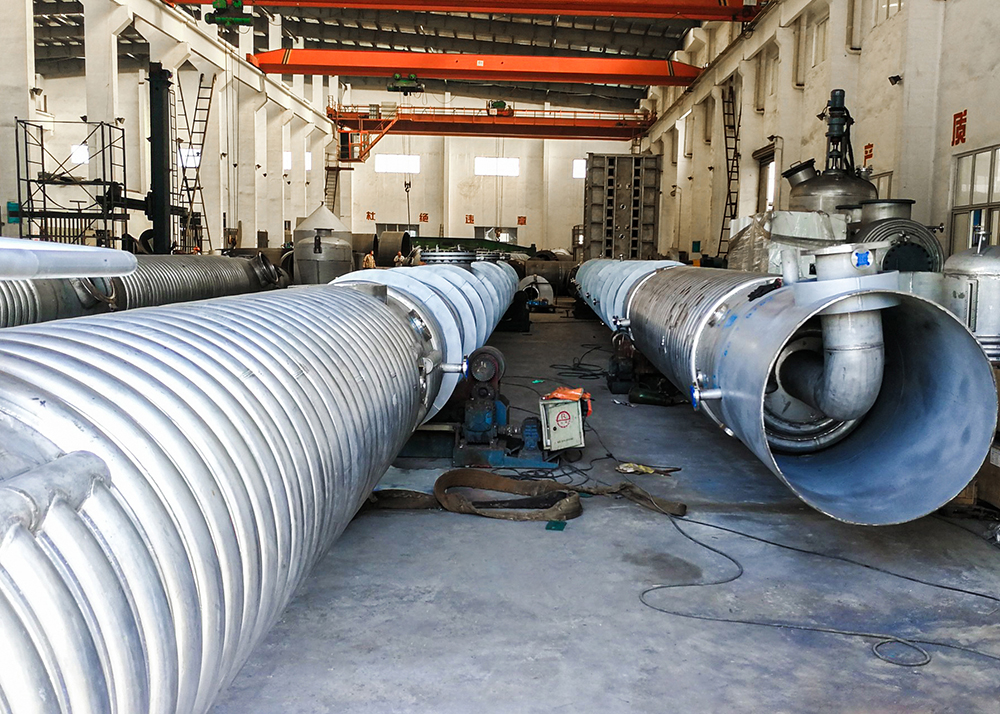
The carbon steel spiral plate heat exchanger is an efficient heat exchange equipment designed based on a "spiral flow channel". Its structural characteristics revolve around "strengthening heat transfer, optimizing flow field, and adapting to carbon steel material characteristics". The core can be analyzed from four dimensions: core components, flow channel design, sealing structure, and support method, as follows:
1、 Core component: Spiral stacked "double plate structure", laying the foundation for heat transfer
The core of a carbon steel spiral plate heat exchanger is a "spiral flow channel unit" made by rolling two carbon steel thin plates through specialized equipment. This is the key difference between it and shell and plate heat exchangers. The specific characteristics are as follows:
Spiral plate body: Two carbon steel thin plates (usually 2-6mm thick, selected from different carbon steel materials according to pressure levels, such as Q235, Q345, etc.) are rolled in parallel to form two mutually isolated and continuously surrounding spiral flow channels (commonly known as "channel A" and "channel B"). The two plates are supported by a "distance column" (carbon steel short cylinder, uniformly welded on the plate surface) to ensure a fixed distance between the flow channels (usually 5-20mm), avoiding channel blockage caused by pressure deformation of the heat exchange plate.
Central cylinder and end plate: A carbon steel central cylinder surrounds the inner side of the spiral channel (serving as the inner boundary of the channel and enhancing overall rigidity); The outer side is welded with carbon steel end plates (circular or square, designed according to the equipment installation scenario), which together with the spiral plate and the central cylinder form a closed flow channel space to prevent the two heat exchange media from flowing in parallel.
2、 Channel design: Combining "reverse flow+turbulence" to enhance heat transfer efficiency
The flow channel structure is the core of achieving efficient heat transfer, and the design focuses on "prolonging the medium contact time and breaking the laminar boundary layer". The characteristics are as follows:
Counter current heat transfer is the main method: two types of heat transfer media (such as cold medium and hot medium) enter from the "outer end" and "inner end" of the spiral channel respectively, and flow in the opposite direction along the spiral (for example, the hot medium flows in from the outer end and flows along the spiral towards the central cylinder; the cold medium flows in from the central cylinder end and flows along the spiral towards the outer end). The counter current method can compare the logarithmic mean temperature difference between two media, and compared to the co current heat transfer, the heat transfer efficiency is improved by 20% -30%.
Forced turbulence effect: The spiral flow channel causes the medium to constantly change direction during flow, forming a "secondary flow" (vortex perpendicular to the main flow direction). This flow state can effectively destroy the "laminar boundary layer" on the surface of the heat transfer plate (laminar boundary layer is the main resistance to heat transfer), causing the medium to transition from "laminar" to "turbulent" (generally, turbulence can be formed when Reynolds number Re>1000). Under turbulent conditions, heat transfer is more direct, and the heat transfer coefficient (K value) is 30% -50% higher than that of shell and tube heat exchangers.
No dead zone in the flow channel: The spiral flow channel is continuous and has no right angle turns, and the medium flow path is smooth without any "dead zones" (areas where the medium stagnates), which can avoid the decrease in heat transfer efficiency caused by local fouling or medium retention. It is especially suitable for media containing small amounts of impurities (such as industrial wastewater and low viscosity oil products).
3、 Sealing structure: adapted to the characteristics of carbon steel, balancing sealing and temperature and pressure resistance
The welding performance of carbon steel material is good, so the sealing structure is mainly based on "welding sealing", and optimized for different pressure scenarios. The characteristics are as follows:
Main sealing: Welding sealing: The connection between the spiral plate and the central cylinder, as well as between the spiral plate and the end plate, is sealed using "carbon steel arc welding" or "gas shielded welding". The weld seam is continuous and dense, and can withstand high pressure (conventional design pressure 0.6-2.5MPa, high-pressure type can reach 4.0MPa) and temperature (carbon steel withstand temperature is usually ≤ 400 ℃, depending on the carbon steel grade, such as Q345R can withstand around 350 ℃).
Auxiliary sealing: gasket sealing (for detachable type): Some carbon steel spiral plate heat exchangers are designed as "detachable" (for easy cleaning of the flow channel), and "oil resistant asbestos gaskets" or "nitrile rubber gaskets" are used as auxiliary seals at the joint surface between the end plate and the cover plate. The gasket should be compatible with carbon steel material to avoid corrosion (such as avoiding the use of acidic gaskets to prevent rusting of carbon steel), and at the same time adapt to the temperature of the medium (such as oil resistant asbestos gaskets that can withstand 250 ℃ and meet medium and low temperature scenarios).
Anti streaming design: At the inlet and outlet of the flow channel, "guide plates" and "sealing barriers" will be installed to prevent the two media from streaming (i.e. mixing cold and hot media) at the inlet and outlet positions, ensuring the purity and heat transfer efficiency of the heat transfer medium.
4、 Support and installation: Strengthen the rigidity of carbon steel and adapt to industrial scenarios
Carbon steel has good rigidity, but the spiral structure as a whole requires additional support to ensure stability. Its characteristics are as follows:
Overall support: Support structure: The bottom of the equipment is usually welded or bolted with "carbon steel supports". Common types include "saddle supports" (suitable for horizontal installation, such as heat exchangers next to storage tanks) and "vertical supports" (suitable for vertical installation, such as heat exchangers matched with reactors). The support and equipment casing are welded with reinforcing ribs to enhance their load-bearing capacity and prevent deformation of the equipment due to its own weight or the weight of the medium.
Internal support: fixed distance column+reinforcement ring: In addition to the fixed distance column inside the flow channel (supporting the two spiral plates to maintain the distance between the flow channels), a "carbon steel reinforcement ring" is also welded on the outer side of the spiral plate (near the end plate) to enhance the radial rigidity of the spiral plate and prevent the spiral plate from "bulging" or deforming due to pressure fluctuations during equipment operation.
5、 Other compatibility features: advantages and disadvantages of fitting carbon steel material
Corrosion resistance: Targeted protection is required: Carbon steel has poor corrosion resistance (easy to rust), so for corrosive media (such as acidic and alkaline media), the carbon steel spiral plate will be subjected to "surface treatment", such as painting with anti-corrosion coatings (such as epoxy resin, polytetrafluoroethylene coatings), galvanizing or chrome plating, to extend the service life of the equipment (without anti-corrosion treatment, only suitable for neutral media such as water and lubricating oil).
Manufacturing process: High rolling accuracy: The rolling of spiral plates requires a dedicated rolling machine to ensure uniform spiral spacing between the two plates (error ≤ 1mm), otherwise it will lead to uneven flow channels, large differences in medium flow velocity, and affect heat transfer efficiency. Carbon steel has moderate ductility and is not prone to cracking during rolling, making it suitable for mass production.





 Wechat number:18626143580



 Service Hotline

 Hotline:0512-52093708
 E-mail:yutezjl@163.com
 Address:No. 101, Taojia Bridge, Dahe Village, Shanghu Town, Changshu City, Suzhou City, Jiangsu Province
 Add wechat
 Contact us
 Telephone